LVC Students Build Strength & Conditioning Skills with Division I Football Internships


Not Seeing the Program You Are Looking For?
Key Points:
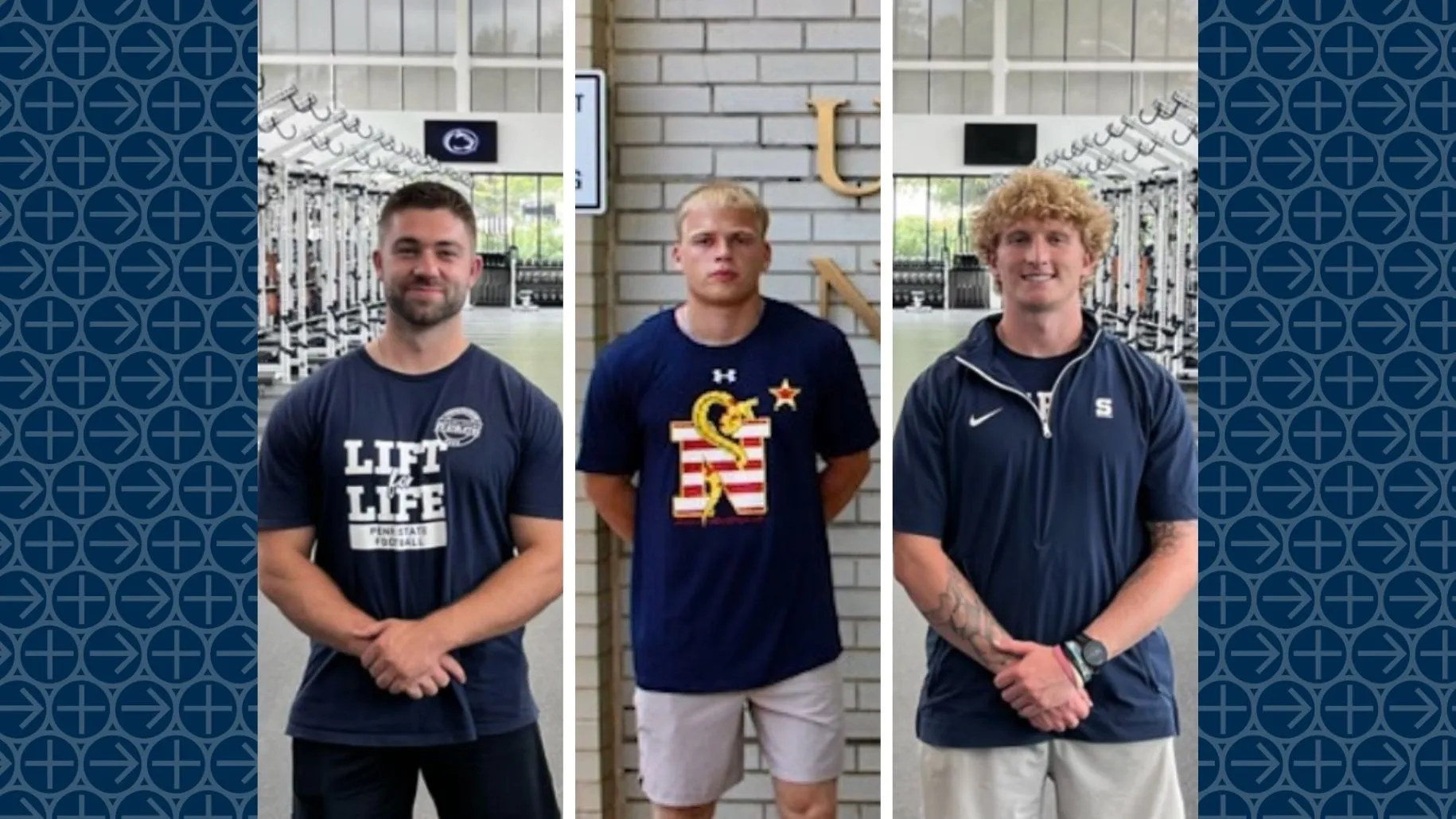
The whistles never stopped. Neither did the work. This summer, three Lebanon Valley College Exercise Science students stepped into the high-pressure world of Division I football, gaining firsthand experience with the Penn State and U.S. Naval Academy programs. For Nick Gleason ’27, Matt Weese ’24, M’26, and Colin Winters ’27, the internships offered more than a glimpse into elite college athletics—they put their LVC classroom knowledge to the test and helped shape the coaches they hope to become.
With Penn State’s program consistently ranked among the best in the nation each year, Gleason and Weese learned about the hard work and commitment required in the offseason.
“Every exercise is on the coach’s whistle, and every player is coached to perform the exercise exactly how a coach wants it,” said Gleason, an Exercise Science major and starting defenseman on the men’s lacrosse squad. “All aspects of a player’s form are critiqued until the athlete can manipulate their body how the coach wants it, which is a very hard thing to do for all 80-100 athletes.”
Weese, a master’s student and LVC Assistant Strength and Conditioning Coach, witnessed that same intensity.
“The lift was very fast paced, and there was absolutely zero joking around,” said Weese. “This internship taught me I need to work my tail off and the importance of developing strong relationships with players and staff members.”
For Winters, who is an All-Region and All-Conference member of LVC’s men’s track and field team, the summer provided a similar opportunity to experience the demands of Division I athletics while interning with the Naval Academy.
While the intensity of the environment was new to the students, the foundation was familiar to what they learned and experienced at LVC. The students relied on concepts and skills they had developed through LVC’s Exercise Science program, including velocity-based training, weight room management, and communication skills.
“I used a lot of concepts from Training and Conditioning, Exercise Physiology, and Nutrition, as well as some of my First-Year Experience courses,” said Gleason. “Specifically, knowing how to set up a weight room, keeping athletes safe, knowing the why behind what they did and what it does to the body, on top of having to prepare for a presentation and present to the staff.”
While classroom knowledge plays a significant role, the students learned strength and conditioning involves far more than selecting exercises or writing workouts. Coaches must command a room, communicate clearly, protect athlete safety, adapt to individual needs, and maintain consistent standards across a large group.
The experience also gave the students an opportunity to learn from coaches who are already working at the highest level of collegiate athletics.
“My mentor on staff was Assistant Strength and Conditioning Coach Anthony Cimino, who taught me valuable lessons about training, being a coach, and interacting with athletes and staff members,” said Winters. “He also encouraged me to be more confident in my abilities as a coach and the knowledge I have.”
Gleason came away with a better understanding of the purpose behind every training decision.
“A big lesson I learned was to ensure that you are chasing the adaptation that you want to chase,” said Gleason. “For example, if you want to get faster, the exercises you choose should help your team get faster instead of just doing something to say you checked a box.”
For Winters, the experience confirmed that collegiate strength and conditioning is a field he wants to pursue.
“This experience made me more interested in pursuing collegiate strength and conditioning,” said Winters. “I hope to find a graduate assistant position as a strength and conditioning coach and then enter the field full-time.”
Weese, who will finish his Master’s in Clinical Exercise Physiology later this year, also left the internship with a greater appreciation for the work that goes into coaching at the Division I level.
“My proudest moment was seeing how appreciative the coaches were at the end of the summer from my hard work.”
For Gleason, the most rewarding moments came when he could see the impact of that work on the athletes themselves, such as when he helped lead the new student-athletes in a lift.
“I had an awesome time being in that environment and seeing results,” said Gleason. “Helping an athlete achieve a goal, get back to the field, or assisting in their recovery is a very rewarding feeling.”
For Gleason, Weese, and Winters, these internships served a larger purpose than learning how Division I athletes train. They discovered what it means to be the person responsible for helping them become better athletes and confirming that they want to make that work their career.