Building an Occupational Therapy Program for Today’s Graduate Students


Not Seeing the Program You Are Looking For?
Insights by William Wrightsman
Key Takeaways
Graduate students are making a significant investment in their education and their future. They want meaningful relationships with faculty, opportunities to apply what they are learning, and an educational experience that fits into their lives without compromising their preparation for professional practice.
Those priorities are helping shape Lebanon Valley College’s new Master of Science in Occupational Therapy program, which anticipates welcoming its first students in May 2028. The two-year, 72-credit hybrid program will combine online coursework with immersive, on-campus laboratory experiences and clinical fieldwork.
William Wrightsman, Founding Department Chair and Associate Professor of Occupational Therapy at LVC, is helping build the program with those students’ needs in mind.
“Graduate students are making a significant investment in their education and their future, and I think they want to know that their faculty and program are equally invested in their success,” said Wrightsman. “They want access to faculty, meaningful relationships, and to be seen as individuals rather than simply as members of a class.”
That philosophy is informing a student-centered culture with relatively small cohorts and strong student-to-faculty interaction. It is also influencing how the program approaches learning. With students able to access so much information independently, Wrightsman believes graduate education needs to offer something beyond simply delivering content. LVC’s curriculum will emphasize active and experiential learning, giving students opportunities to apply knowledge through discussion, practice, problem-solving, and feedback.
“I often think about the question: What can students learn by being part of this program that they couldn’t simply learn by searching for information online? That is where faculty expertise, mentorship, experiential learning, professional socialization, and interaction with a cohort become so important,” Wrightsman said.
The program’s hybrid format is another way LVC is responding to the needs of today’s graduate students. Students will be able to complete much of their coursework online without relocating to Annville, reducing the time and expense associated with commuting to campus. At the same time, the program will maintain the expectations and academic rigor of a traditional full-time graduate education.
“This will be a full-time, academically rigorous graduate program. Students will have scheduled synchronous classes, coursework, collaborative activities, laboratory practice, fieldwork, and other responsibilities,” Wrightsman said. “The flexibility comes from where and, for some learning activities, when students learn—not from reducing what is expected of them. Our goal is to remove unnecessary barriers while preserving the commitment and engagement required to become an occupational therapist.”
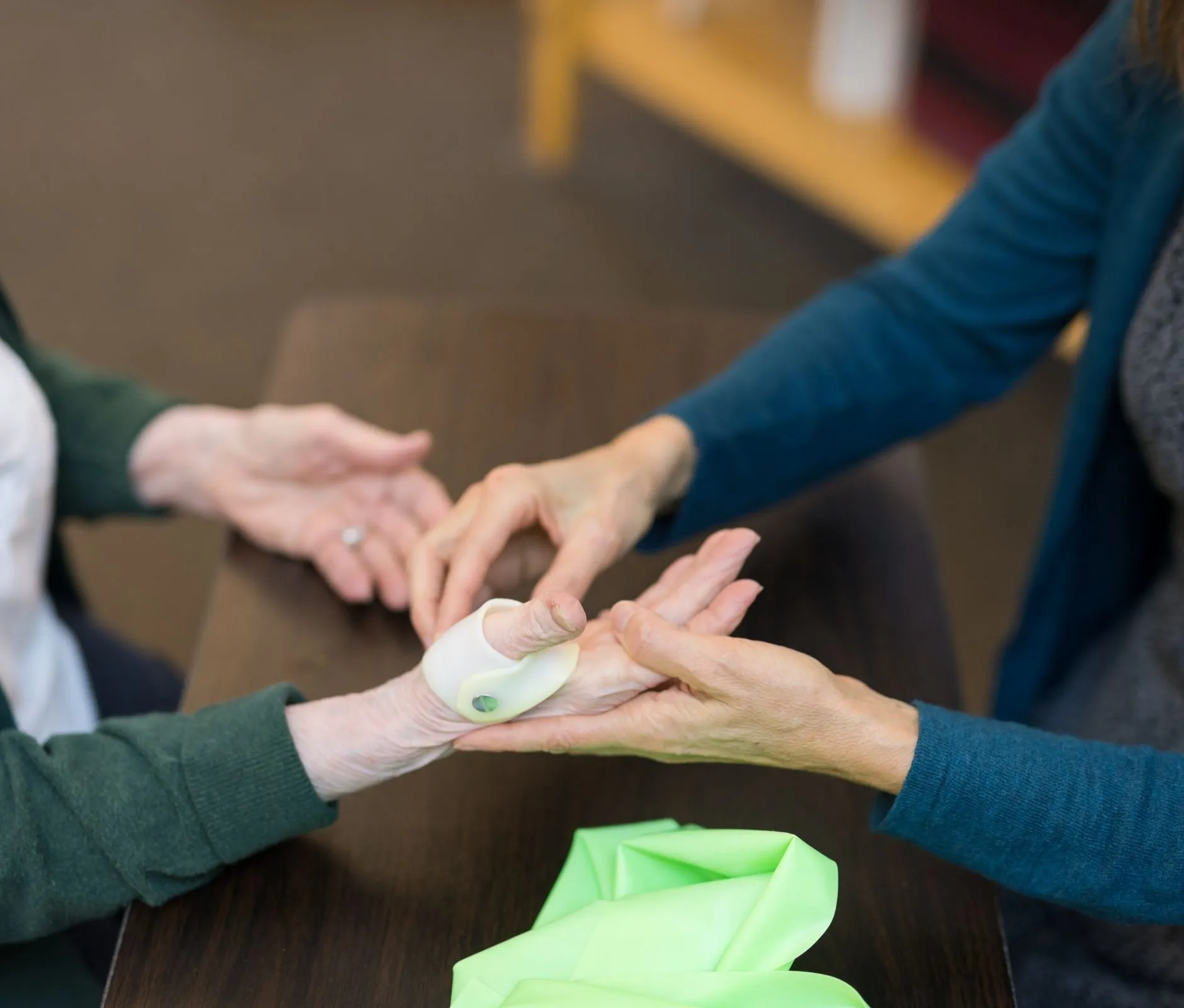
Because occupational therapy is a hands-on profession, virtual learning will be complemented by intensive, week-long, on-campus experiences during each of the first four semesters. Students will work directly with faculty and classmates to practice skills, integrate knowledge across courses, and demonstrate competencies through laboratory activities, case-based experiences, and interactions with standardized patients. These experiences will take place in LVC’s Jeanne and Edward H. Arnold Health Professions Pavilion, which offers specialized teaching spaces and technology, including the Anatomage table.
“The combination allows us to be flexible about where learning occurs without being flexible about whether students have actually achieved the required competencies,” Wrightsman said. The immersive experiences will also help students develop relationships with their classmates and faculty and strengthen the collaborative skills essential to health care practice.
Beyond preparing students for their first jobs, the curriculum will address the evolving needs of the occupational therapy profession. Evidence-based practice will help students integrate research with clinical reasoning, client priorities, and professional expertise, while the program will also explore the expanding range of settings in which occupational therapists can contribute to health, participation and quality of life.
“Ultimately, we want graduates who understand the profession’s foundations while also being curious and adaptable enough to help shape where occupational therapy goes next,” Wrightsman said.
That preparation involves more than clinical competence. Wrightsman wants LVC graduates to be strong communicators, problem-solvers, lifelong learners, and professionals who understand the importance of client-centered care.
“Occupational therapy is fundamentally a caring, client-centered profession. We want our graduates to be able to establish therapeutic relationships, understand the importance of therapeutic use of self, and genuinely listen to and understand the priorities of the people they serve.”
As the founding chair of a new program, Wrightsman has an opportunity to make deliberate choices about how students learn and experience graduate school. Rather than adapting an existing residential program for online delivery, LVC is designing a hybrid experience specifically for the students it hopes to serve. The goal is to create a community where students feel known and supported while being held to high academic and professional standards.
“I want flexibility, rigor, and community to be complementary rather than competing characteristics of the LVC Occupational Therapy Program. Students should be able to pursue their education from where they live while still feeling deeply connected to their faculty, their cohort, Lebanon Valley College, and the profession they are preparing to enter.”
For Wrightsman, the goal extends beyond creating a flexible pathway to a graduate degree. He hopes the program’s first graduates will leave LVC confident in their abilities, prepared for the NBCOT certification examination and entry into practice, and proud of the professional community they helped create. As he puts it, “I hope they look back and say that the program asked a great deal of them, but that they never felt as though they were doing it alone.”