
From Specialist to Leader: How an MBA Helps You Step into Management


Not Seeing the Program You Are Looking For?


Key Points:
When people picture business school, they often imagine a tiered lecture hall: a professor far down at the front, a few hundred faces, and a real chance of finishing the term without anyone learning your name. Plenty of programs still run that way. It is not the only option, and for working professionals, it is rarely the best one. Class size is one of those details that sounds minor on a brochure and turns out to shape almost everything about the experience. Here is what actually changes when the room is smaller.
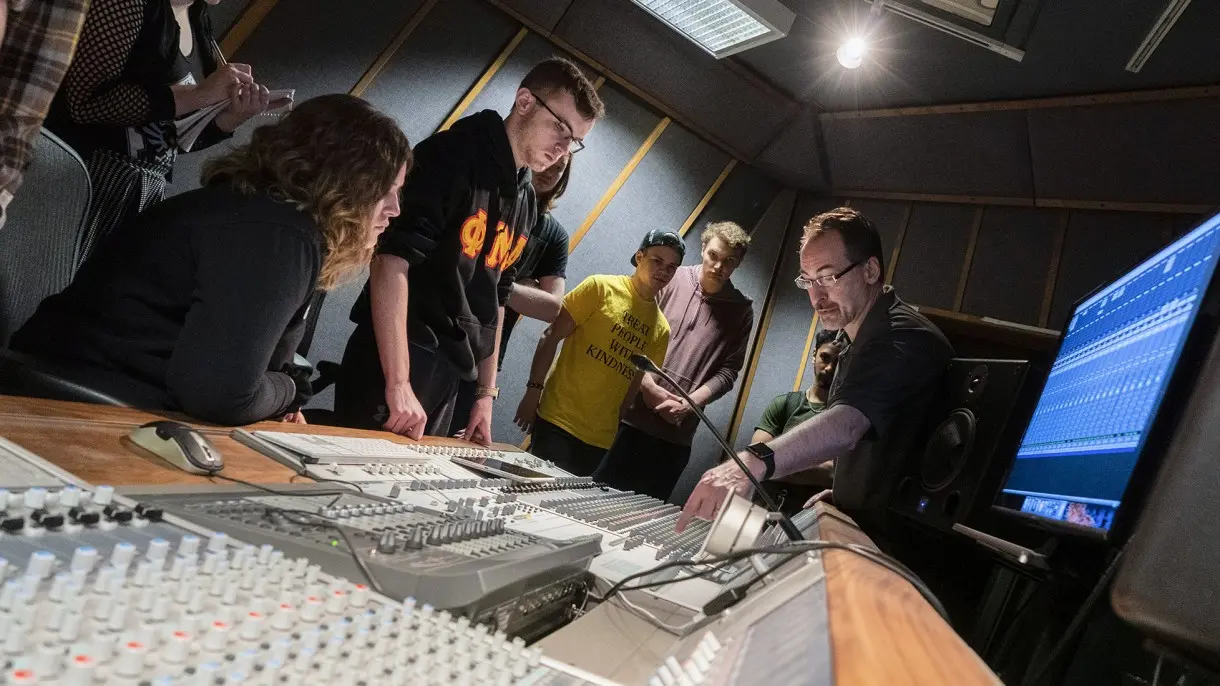
In a small class, the professor can answer your question, push back on your reasoning, and remember the project you mentioned last week. That matters even more in graduate business courses, where the most valuable teaching often comes from an instructor who has run a department or closed a deal and can tell you how the textbook holds up in the real world. You cannot have that exchange from row 30.
Business is not learned by memorizing definitions. It is learned by arguing through messy situations where there is no clean answer. That only happens when people feel known enough to speak up—to disagree, to share what went wrong at their own company, to test an idea out loud. A smaller group makes that kind of honest conversation possible instead of theoretical.
“The curriculum was extremely fluid and relatable… a way for me to engage in the courses while interacting with a wide variety of business professionals of all ages and backgrounds.” — Joey Venezia ’06, M’13, Operations Director, Tanger Outlets
There is a difference between collecting contacts and building relationships. In a large program, you might share a room with hundreds of people and truly know a handful. In a smaller cohort, you end up working closely with classmates across very different fields—someone in healthcare, someone in logistics, someone running a family business—and those are the connections that still mean something after graduation.
That is exactly the value LVC’s alumni point to. As Austin Lesher M’25 put it, the lasting lesson was learning how people in other corners of the business actually think and approach problems—the kind of insight you only get from people you genuinely know.
It is fair to wonder whether “small and personal” survives the move to an online program. At LVC, it does. The College has built its reputation on close-knit, student-focused learning—its undergraduate student-to-faculty ratio sits at about nine to one—and that same instinct carries into its online MBA. Courses are taught by faculty who know your name and your goals.
The format is flexible. The attention is not optional. For a working adult juggling a job, a family, and a degree, that combination is often the whole point.
If you want a graduate business education where you are a person, not a seat number, learn more about LVC’s online MBA.